
Composite Door Specialists
Composite Doors Explained, and How to Pick the Right One
07900 985699Get Your Free Quote
- Composite door specialists
- 750+ 5-star reviews
- No deposits
What a Composite Door Is Actually Made Of
Cut one in half and the name makes sense. The outer skin is glass reinforced plastic, a thick moulded shell that carries the woodgrain texture and the colour all the way through rather than wearing it as a coat of paint. Behind that sits a dense core, either a solid timber laminate or a high density foam, and the whole slab is held in a reinforced frame that keeps it square.
That sandwich is where the weight comes from. A composite door feels closer to a decent hardwood door than to a hollow plastic panel when you swing it, and it is the mass and the filled core that do the work on heat, noise and forced entry.
- GRP outer skin - glass reinforced plastic, moulded with a woodgrain or smooth face and coloured through, so a scuff does not reveal a different colour underneath
- Insulating core - solid timber laminate or high density foam filling the slab, rather than voids and thin panels
- Reinforced frame - a rigid frame that holds the door square and gives the locking gear something solid to bite into
- Weather seals - compression seals around the leaf and a sealed threshold to keep driving rain and draughts outside
- Factory finish - colour and texture are built in at manufacture, so there is nothing to sand back and repaint in five years
Composite, uPVC or Timber
Most people land on a composite door after living with one of the other two. uPVC is cheaper and perfectly serviceable, but the slab is lighter and the panels thinner, and on an exposed front it can flex and sound hollow when it shuts. Timber looks superb and can be repaired, but it moves with the seasons and it wants sanding and repainting every few years to keep looking right.
A composite door is the middle ground most homeowners are after, roughly the look and heft of timber with the upkeep of plastic. It will not swell in a wet November or stick in a hot July, and it does not need painting to survive a Greater Manchester winter. The trade off is that it is made to size in a factory, so it cannot be planed and refinished the way a joiner would treat a hardwood slab, which is why the survey and the fit have to be right first time. The fitting side of it is covered on our composite door installation page.
- Against uPVC - heavier slab, filled core, better insulation and a far more convincing woodgrain finish
- Against timber - no repainting, no seasonal swelling or sticking, and no soft rot creeping into the bottom rail
- What you give up - a composite slab is made to measure and cannot be trimmed on site, so accurate measuring matters more than it does with timber
- What stays the same - from the pavement a good composite door reads as a solid painted timber door, which is the whole point of it
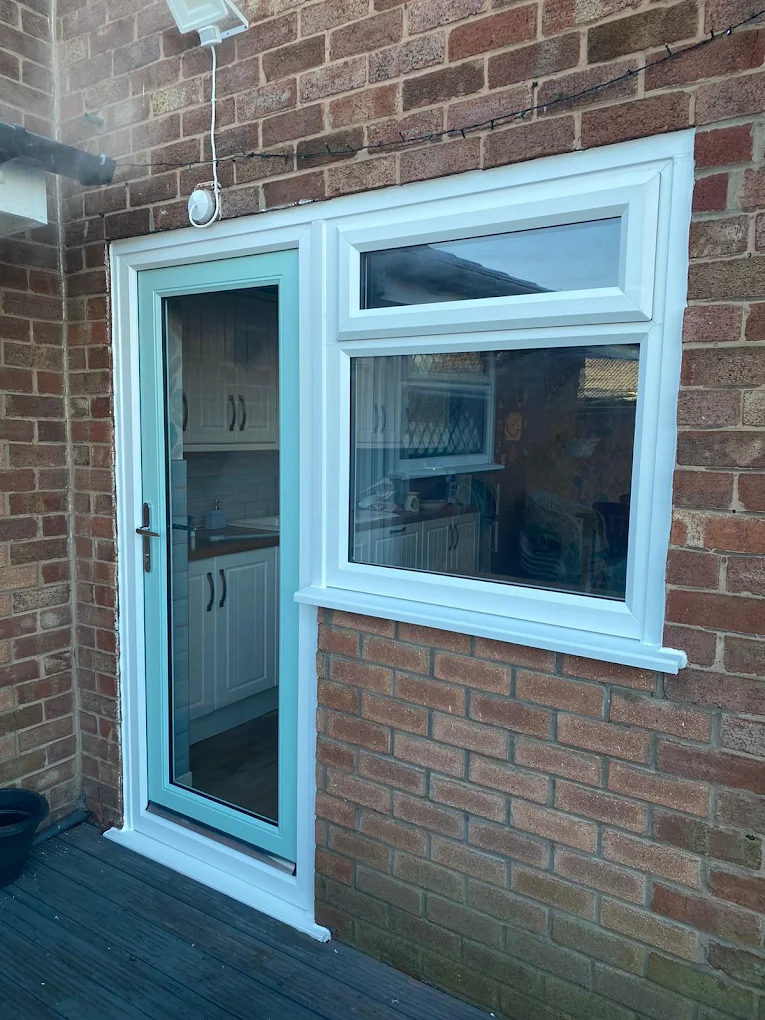
Styles, Colours, Glass and Hardware
This is where the actual choosing happens. The slab design sets the character, the colour sets the mood, and the glass decides how much daylight ends up in your hallway. Solid doors are the cleanest and the most private. Half glazed and four panel designs let light through without putting your hall on display. A full length long light suits a dark entrance or a newer house with a plainer frontage.
Because the colour is made into the skin, a dual colour door is straightforward: a strong shade outside such as anthracite grey, a deep green or a classic red, with white or a light woodgrain inside so it does not argue with your decor. Hardware then finishes the job. Handle, letterplate, knocker, spyhole and hinges come in matching finishes, and picking one family and sticking to it is what makes a door look considered rather than assembled.
If you go for supply and fit, we will walk you through style, colour, glass design and hardware rather than handing you a brochure and leaving you to it.
- Door styles - solid, half glazed, four panel, cottage and plainer contemporary designs with a long light
- Colour - popular shades as standard, with premium colours and dual colour options for a different finish inside and out
- Glazing - clear, obscure or decorative glass, from plain frosted through to leaded and stained designs
- Side panels and top lights - glazed panels beside or above the door to widen the opening or brighten a dark hall
- Hardware finishes - handles, letterplates, knockers and hinges in chrome, satin, black or gold, matched across the door
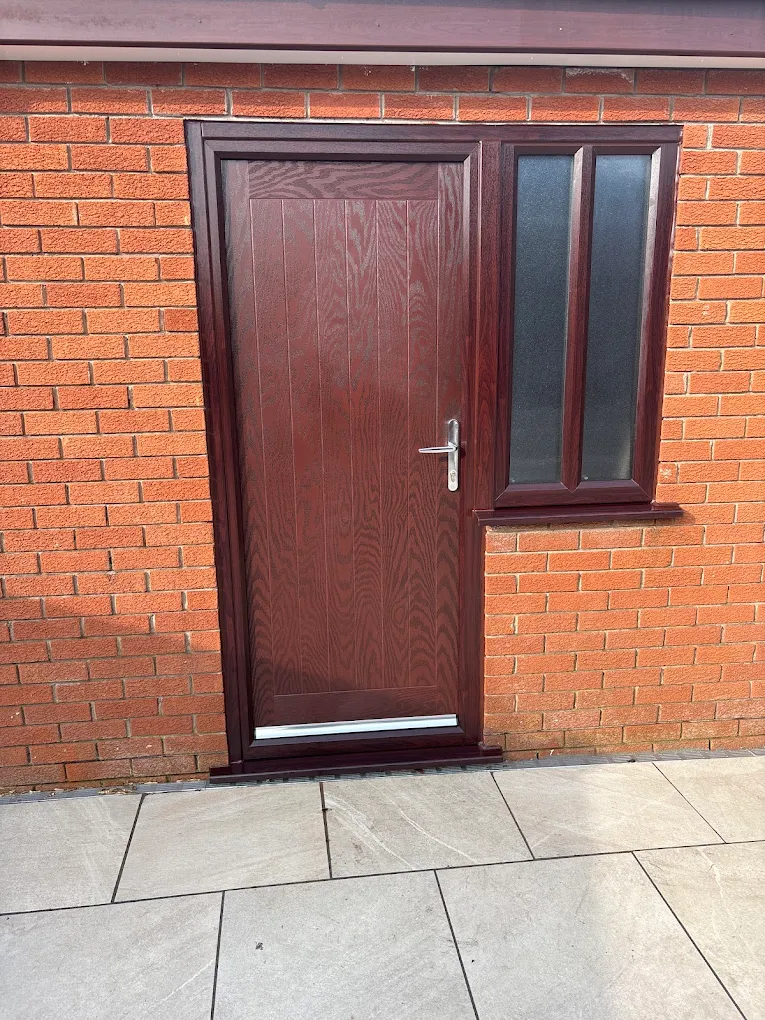
Security, Warmth and the Right Door for Your House
Security comes from three things working together. The filled core resists a kick, the multi point lock throws hooks or bolts into the frame at several heights instead of relying on one latch, and the cylinder handles the part that actually gets attacked. Ask about the cylinder specifically, because an anti snap, anti bump and anti drill cylinder is a modest upgrade for a large amount of peace of mind. None of it counts for much unless the frame is packed and fixed properly and the keeps are adjusted, which is a fitting question rather than a product one.
On warmth, the insulated core and the compression seals do the heavy lifting. A composite door normally replaces something older with a tired threshold and a gappy letterplate, so the difference on a windy night is obvious the same week. It holds that performance too, because there is no timber shrinking away from the seals each summer.
As for matching the house: a Victorian or Edwardian terrace usually carries a four panel or cottage style with obscure or leaded glass, a 1930s semi wears a half glazed door with a bit of stained detail well, and post war and modern estate houses tend to look best with a plain slab and a long light. If your front is dark, a side panel does far more for the hallway than any amount of glass in the door itself.
- Multi point locking - hooks and bolts engaging the frame at several points, standard across the composite doors we supply
- Cylinder grade - anti snap, anti bump and anti drill cylinders are worth specifying rather than assuming
- Insulated core and seals - fewer draughts around the threshold and a noticeably warmer hall in winter
- Low maintenance - a wash down and a drop of oil on the hinges and lock is the entire routine
- Suiting the property - period panel styles for older terraces and semis, plainer slabs and long lights for newer builds
Trusted By Hundreds
See what our customers have to say
 5 star rated
 5 star rated
 5 star rated
 5 star rated
Composite Doors
GRP outer skin
glass reinforced plastic, moulded with a woodgrain or smooth face and coloured through, so a scuff does not reveal a different colour underneath
Insulating core
solid timber laminate or high density foam filling the slab, rather than voids and thin panels
Reinforced frame
a rigid frame that holds the door square and gives the locking gear something solid to bite into
Frequently Asked Questions
What is a composite door made of?
A moulded glass reinforced plastic skin on both faces, a dense core of solid timber laminate or high density foam between them, and a reinforced frame around the lot. The colour and woodgrain are moulded into the skin rather than painted on. It is that layered build that gives the door its weight and its insulation.
Do composite doors warp, swell or stick?
They should not. There is no solid timber face to take on moisture, so the door does not swell shut in wet weather or shrink away from the seals in a hot spell. If a composite door ever starts to catch it is almost always the hinges or keeps wanting a small adjustment rather than the slab itself moving.
How long should a composite door last?
They are built to shrug off UK weather for decades, and there is no repainting cycle to keep on top of. Our 10-year guarantee covers our installation work, and the doors themselves are covered by manufacturer warranties. Realistically the hardware shows its age first, and handles and cylinders are easy to swap.
Will the colour fade?
The colour runs through the GRP skin rather than sitting on the surface, so it cannot flake or peel the way paint does, and modern skins are UV stable. A very strong shade on a south facing front may soften a touch over many years, which is one reason mid greys, greens and blues stay popular around here. A wash down twice a year keeps the finish looking fresh.
How do I clean and maintain a composite door?
Warm soapy water and a soft cloth, and nothing abrasive or solvent based on the skin or the glass. Once or twice a year put a drop of light oil on the hinges and a dry lubricant in the cylinder, and wipe the rubber seals so grit is not sitting on them. That is genuinely the whole job.
What makes a composite door harder to force than a uPVC one?
Three things working together. The core is solid rather than hollow, the outer skin is much tougher, and composite doors come with multi point locking as standard. The weak point on any door is the cylinder, so pair the door with an anti snap cylinder and you have covered both the brute force and the sneaky approach.
How does a composite door compare with a timber front door?
From the street they look similar, which is most of the appeal. The difference shows over the next ten years: timber wants sanding and repainting and moves with the seasons, while a composite door stays put and only wants washing. What timber keeps is repairability, since a joiner can plane and fill a solid door in a way you cannot with a moulded skin.
Can I have a different colour inside and out?
Yes, that is a dual colour door and it is a common request. Most people go bold outside, anthracite, green, red or blue, and keep white or a light woodgrain inside so the door sits quietly in the hallway. It carries a modest uplift over a single colour door, and we itemise it on the quote rather than burying it.
What glazing options are there?
Clear, obscure or decorative, and the choice changes the character of the door completely. Obscure glass brings light into the hall without anyone seeing through, while leaded and stained designs suit older terraces and semis. Glazing in and beside a door is specified as safety glass where the regulations call for it, so it is not a compromise on a house with children.
Do composite doors come in standard sizes?
They are made to measure, which is why we survey the opening before anything is ordered. That matters most in the older housing stock around Wigan and Atherton, where original openings are rarely square or a neat modern size. A made to measure slab and frame means no packing gaps and nothing trimmed on site.
Can I add a side panel or a top light?
Yes, and it is worth thinking about if your hallway is dark or your opening is wider than a standard door. A glazed side panel throws far more light into a hall than extra glass in the door itself does, and a top light works where the opening is tall. Both are measured and made as one unit with the door so the frame lines up.
What hardware finishes can I choose?
Handles, letterplates, knockers, spyholes and hinges come in matching families, typically chrome, satin, black or gold. Black tends to sit well on grey and green doors, chrome and satin on white and lighter finishes, and gold suits traditional panel styles on older houses. Pick one finish and carry it across every piece of ironmongery on the door.
Not Sure Which Door You Want Yet?
That is normal, and it is the easy part. Tell us about your house and we will help you narrow down the style, colour, glass and hardware, then put a free written quote in front of you. No deposits, 10-year guarantee. Call PH Windows & Doors on 07900 985699.